
Apr 1, 2026 · Scott Richey · 8 min read
Why Bakers Weigh Ingredients Instead of Using Cups
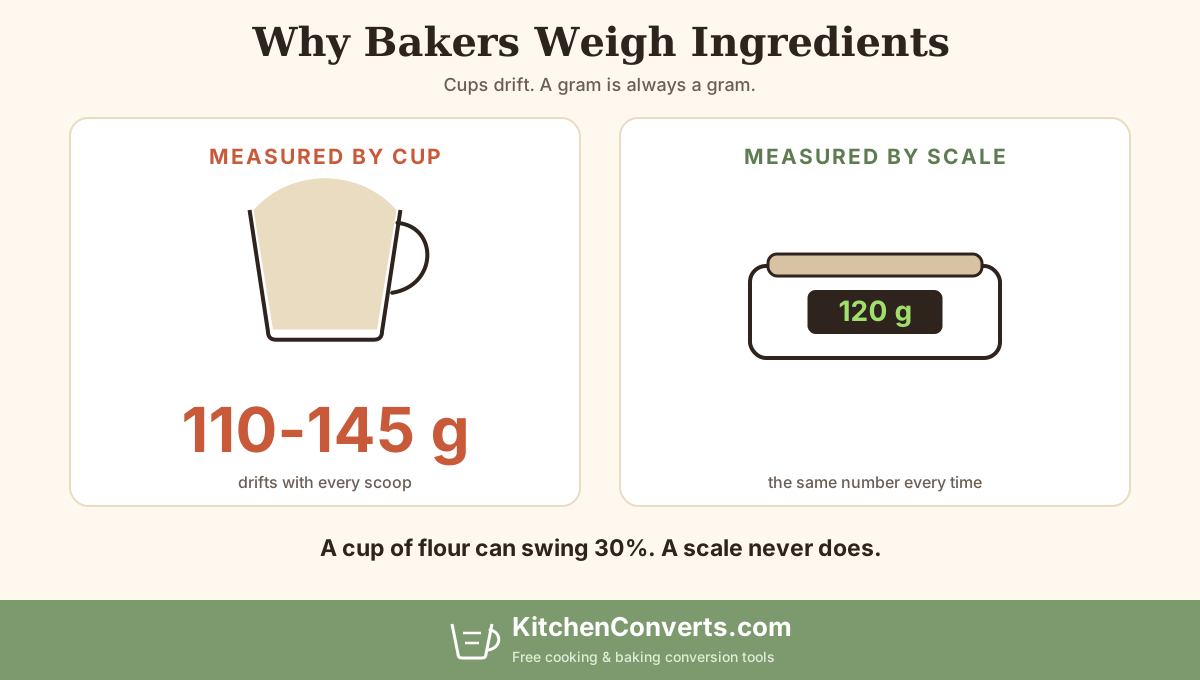
Bakers weigh ingredients because cups are unreliable. The same one-cup measure can hold anywhere from 110 to 145 grams of flour depending on how you scoop, how the bag has settled, and what the weather is doing. That 30 percent gap is the difference between cookies that work and cookies that do not. A digital scale fixes the whole problem in one move. 120 grams is 120 grams, every time. This guide covers why weighing matters, which foods need it most, what scale to buy, and when cups are fine to keep using.
Why do professional bakers weigh ingredients?
Because they want the same result every time, and cups cannot deliver that. A professional baker making the same loaf fifty times needs the dough to start from the same place on every batch. Cups give a different starting point on every measure. Weights give the same number every time.
The deeper reason is chemistry. Baking is a set of chemical reactions that depend on ratios. Flour to water. Sugar to fat. Leavener to dough. Push any of those ratios off by 10 percent and the bake responds. Push them off by 25 percent and the bake is a different food. Cup measurements drift that much by accident. Weights do not drift. A gram is a gram regardless of who scooped, when, or where.
For the deeper mechanics behind why two scoops of the same flour can disagree, see why scale and cup disagree.
What can go wrong with cup measurements?
Four things change between two cups of the same food, and they all stack:
- How you scoop. Pushing the cup into the bag packs the food in. Spooning the food gently into the cup leaves air pockets. Same cup, different weight.
- Settling. A bag of flour that bounced around in a grocery cart packs tighter than one that sat still on the shelf. The flour did not change; the spaces between grains did.
- Humidity. Flour, sugar, cocoa, and baking soda all soak up water from the air. On a wet summer day, the same cup of flour weighs more than it did in dry winter air.
- Brand and milling. Different brands grind their flour to different particle sizes. A finer mill packs tighter into a cup. The brand on the bag may look the same; the grams in the cup are not.
Each variable alone is small. Stack them and you can be off by 25 percent without doing anything wrong. The recipe writer measured under their conditions. You measured under yours. The bake reflects the gap.
Which foods need weight measurement the most?
Flour is the worst offender by a wide margin. Cocoa and brown sugar are close behind. Sugar, butter, and honey are usually fine in cups. Salt and yeast depend on the form. Here is the food-by-food sensitivity ranking:
| Ingredient | Volume drift | Weigh it? | Why |
|---|---|---|---|
| All-purpose flour | Up to 25% | Yes | The biggest miss in any home recipe. Worth weighing every time. |
| Bread flour | Up to 25% | Yes | Same drift as AP, plus higher protein amplifies dough texture issues. |
| Cocoa powder | Up to 20% | Yes | Clumps badly in storage. Cup-measuring is wildly inconsistent. |
| Brown sugar (packed) | Up to 30% | Yes | If you do not pack firmly, the cup is half air. |
| Powdered sugar | Up to 15% | Often | Cakes and frostings care; cookie glazes do not. |
| Granulated sugar | Up to 5% | Optional | Packs the same way each time. Cup measurement is usually fine. |
| Butter | Up to 10% | Optional | US sticks are marked. European blocks need a scale or a chart. |
| Honey, syrup | Up to 5% | Optional | Volume is fine. Weighing avoids the sticky cup mess. |
| Salt | Up to 50% | Sometimes | Diamond Crystal kosher fills a teaspoon to half the weight of Morton table salt. Switch brands, switch your salt seasoning. |
| Yeast (instant or active) | Up to 15% | Yes | Tiny amounts amplify. 7 grams matters more than 1/4 teaspoon suggests. |
If you are going to weigh just one thing, weigh the flour. It is the biggest single mover in almost every baked good. For the deeper guide on flour specifically, see how to measure flour correctly.
How much accuracy do you actually gain with a scale?
Roughly a 10-to-20-fold improvement on dry food measurement. A typical home cook scooping flour into a cup will land within 25 percent of the target weight. A typical home cook using a tared digital scale will land within 1 to 2 grams, which is under 2 percent for a 120-gram pour.
That accuracy gain is what turns inconsistent bakes into consistent ones. The recipe that worked great last time and somehow flopped this time? It was the cup. A scale removes the variable. Your bake either works or it does not, and when it does not you can actually find the cause instead of chasing a moving target.
Scaling a recipe up or down also gets easier. Doubling a recipe in cups doubles the scoop error. Doubling in grams is one number times two. Our recipe scaler handles the math cleanly in both units; pair it with a scale and the doubled or halved batch comes out the same as the original.
What kind of kitchen scale should you buy?
A digital scale, around 20 to 40 US dollars, with gram precision and a tare button. That is the whole shopping list. Apps, Bluetooth, and Wi-Fi are not needed and tend to break before the scale does.
What to look for:
- Gram resolution. The scale should read in 1-gram increments (or 0.1 gram for small amounts like yeast and salt).
- Tare button. Lets you zero out the weight of the bowl so you only measure the food.
- Capacity around 5 kilograms (11 pounds). Big enough for a large mixing bowl with bread dough.
- Flat top with a removable cover for easy cleaning. Flour dust gets everywhere.
- Battery life or a USB charger. Most home scales run for a year on a single set of batteries.
Brands that consistently get good reviews include OXO, Escali, Etekcity, and KitchenAid. Pick whichever fits your budget. Avoid mechanical analog scales because they cannot tare and they round to roughly 25 grams, which defeats the purpose of weighing.
When is measuring by cup actually fine?
Any time the recipe forgives a 10 percent miss. Soups, stews, stir-fries, pasta, rice, and most weeknight savory cooking shrug off small ingredient drifts. Cup measurement is fast, the cleanup is easier, and the dish does not care.
Cups are also fine for liquids in baking, mostly. Water, milk, oil, and other free-flowing liquids fill a liquid measuring cup to the same level every time. Use a liquid cup with a meniscus mark for those, not a dry cup. Honey, molasses, and other sticky liquids are the exception; weigh those because the cup never empties out cleanly.
Where cups break down is structured baking: bread, pastry, cake, cookies, biscuits, and anything where gluten development, hydration, or leavening ratios matter. That is when the scale earns its place on the counter.
How do you switch your existing recipes from cups to weights?
Convert once, write the weights in the margin, and never look back. Three steps:
- For each cup measurement in the recipe, look up the per-cup gram weight of that ingredient. Use our cups to grams converter for the common ones (flour, sugar, butter, oats, cocoa, honey, and more).
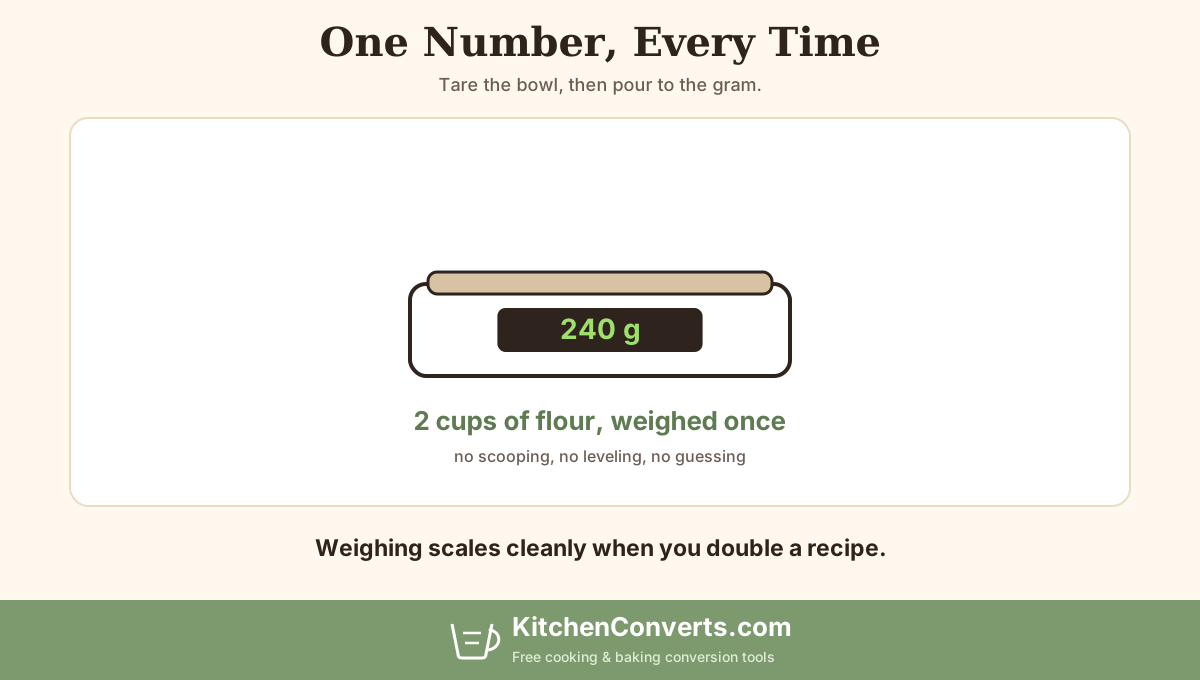
- Multiply the cup count by the gram weight. So 2 cups of flour at 120 grams per cup becomes 240 grams. 1/2 cup of brown sugar at 220 grams per cup becomes 110 grams. Write the gram number next to the cup number.
- The next time you make the recipe, use the gram numbers. Same recipe, fewer steps, cleaner results.
For flour specifically, the matching tool is the flour cups to grams converter. For butter (which has its own quirks with US sticks vs European blocks), use the butter converter. For metric recipes that you want in cups, the grams to cups converter runs the math the other way.
What are the most common mistakes when weighing ingredients?
Five errors that defeat the point of a scale:
- Forgetting to tare. The bowl weight gets added to every ingredient. Tare zeroes the bowl out before each new ingredient if you are stacking.
- Adding all ingredients at once and assuming the total is correct. If you go over on flour by 5 grams, the scale will not tell you which item was wrong. Add one at a time.
- Putting the scale on an uneven counter. Tilted scales read off by a few grams. Glass cooktops and most kitchen scales do not play well; use a flat counter or a board.
- Trusting old recipes that say "1 cup of flour" without specifying the cup-to-gram conversion. Pre-1990 American cookbooks often assumed scoop-method cups (~140 g), not spoon-and-level (~120 g). Look at the cookbook's intro to see which it expected.
- Forgetting to weigh tiny amounts. 7 grams of yeast versus 5 grams of yeast is a 40 percent miss that can flatten a loaf. Small ingredients amplify; weigh them too.
Quick reference for common bakery weights
Frequently asked questions
Do I really need a scale to bake at home?
Need is strong. Want is the right word. You can bake fine with cups if your recipes are forgiving and you measure carefully. But if you find yourself frustrated by inconsistent results from the same recipe, a scale is almost certainly the fix. Most home cooks who switch to weighing do not go back.
Is it worth weighing wet ingredients like milk and oil?
For most home recipes, no. Liquids fill a measuring cup the same way every time, so a liquid cup is accurate. Exceptions: honey, molasses, peanut butter, and other sticky liquids waste a lot of product in the cup. Weighing those saves food and gives a cleaner number. For free-flowing liquids, the cup is fine.
Why do European recipes feel easier to follow?
Because they were written in grams from the start. European cookbooks have used metric weight for decades, so the recipe writer measured the same way the home cook is supposed to. American recipes inherited the cup tradition, which works for the writer but introduces a translation step for everyone else. A scale closes that gap.
Can I trust the gram weights on a recipe blog?
Mostly yes, with one caveat. Different sources use slightly different reference weights (King Arthur uses 120 g per cup of all-purpose flour; some older charts use 125 or 128). The gap is 4 to 7 percent, small but real. If a recipe is critical, check the source's reference weight or stick with King Arthur Baking as the modern American standard.
What about salt: which kind matters for weighing?
Salt is the worst-case for volume measurement. A teaspoon of Diamond Crystal kosher salt weighs roughly half a teaspoon of Morton table salt because the crystals are flakier. If a recipe says "1 teaspoon kosher salt" and you use table salt, your dish is twice as salty. Weighing (about 6 grams per teaspoon for fine salt, 3 grams for flaky kosher) makes the swap reliable. Many serious bakers just weigh salt for this reason.
Will a scale make my bread better?
Almost always, yes. Bread is the most ratio-sensitive baking you can do at home. Hydration (water-to-flour weight ratio) drives crumb structure. A 5 percent hydration miss makes a noticeable difference. A scale lets you hit hydration on the nose every time, which means your dough handles the same way batch after batch.
Pick your ingredient, get the gram weight per cup. Built for converting older recipes to weights once, cleanly.
Sources
Related posts
- How to Measure Flour Correctly (Spoon and Level, Not Scoop)
Spoon and level for 120 grams per cup. Scooping packs in up to 25% more flour and throws a recipe off. How to measure flour by cup or by scale.
- High-Altitude Baking: How Cup and Gram Conversions Change Above 3,000 Feet
Above 3,000 feet, the same recipe that worked at sea level falls flat, runs over the pan, or comes out dry. Lower air pressure changes how flour behaves, how leavening works, and how liquids evaporate. Here is exactly what to change and by how much.
- Why Your Kitchen Scale and Measuring Cup Disagree
You measured 1 cup of flour, then weighed it. The scale showed 145 grams. Your recipe wanted 120. Both tools are right. The cup just held more than the recipe expected.
- How to Read a Metric Recipe When You Only Have US Cups
European and Australian recipes give grams and milliliters. US cookware gives cups and tablespoons. Here is the cheat sheet to translate without ruining the recipe.
¿Leer en español? Ver esta publicación.