
May 9, 2026 · Scott Richey · 3 min read
How to Measure Sticky Honey Without Losing Half in the Cup
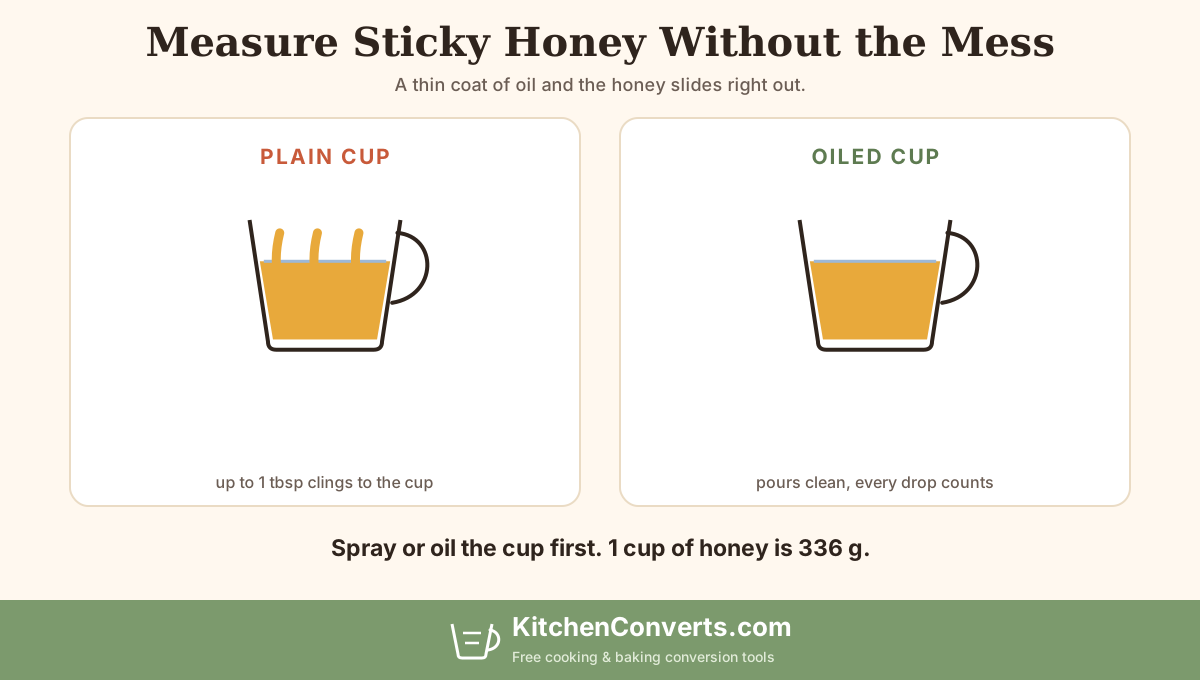
You poured 1 cup of honey into the measuring cup. You tipped it over your bowl. A thick coat of honey stayed inside the cup. Your recipe is now short 10 percent honey, and that is the part of the sweetness it counted on.
Why honey clings
Honey is mostly sugar dissolved in a small amount of water. Its surface tension pulls hard against any dry surface it touches. Plastic, glass, metal: they all hold onto honey. Add a film of oil between the cup and the honey, and the surface tension breaks. The honey lets go.
The three working methods
1. Spray-or-oil method (volume)
Lightly spray the inside of the measuring cup with cooking spray. Or rub a few drops of vegetable oil around the inside with a paper towel. Pour the honey. Tip into the bowl. Almost all of it comes out.
2. The scale method (best)
Place your mixing bowl on a kitchen scale. Hit tare. Pour honey from the jar directly into the bowl until you see the right number of grams. No measuring cup at all. No honey left behind.
3. The other-liquid trick
If the recipe also calls for oil or butter, measure the oil or butter first. The cup is already coated. Pour the honey in next; it slides out cleanly without extra prep.
Crystallized honey
Honey crystallizes when it sits at cool temperatures. It is still good. To re-liquefy, set the jar in a bowl of warm (not boiling) water for 10 minutes. Do not microwave at high power; honey can scorch.
Quick weights
- 1 tablespoon honey = 21 grams
- 1/4 cup honey = 84 grams
- 1/2 cup honey = 168 grams
- 1 cup honey = 336 grams
- 2 cups honey = 672 grams (about 1.5 pounds)
Convert any honey amount between cups and grams.
Sources
Related posts
- High-Altitude Baking: How Cup and Gram Conversions Change Above 3,000 Feet
Above 3,000 feet, the same recipe that worked at sea level falls flat, runs over the pan, or comes out dry. Lower air pressure changes how flour behaves, how leavening works, and how liquids evaporate. Here is exactly what to change and by how much.
- Why Your Kitchen Scale and Measuring Cup Disagree
You measured 1 cup of flour, then weighed it. The scale showed 145 grams. Your recipe wanted 120. Both tools are right. The cup just held more than the recipe expected.
- Yeast: Why 1 Packet Is Not 1 Tablespoon
A standard packet of yeast is 7 grams or about 2 and 1/4 teaspoons. That is 3/4 of a tablespoon, not a full one. Using a full tablespoon adds 33 percent more yeast.
- Rolled vs Quick vs Steel-Cut Oats: Same Name, Different Weight
Rolled and quick oats both weigh about 90 grams per cup. Steel-cut oats weigh 180 grams per cup. Swapping one for another in a recipe changes everything.
¿Leer en español? Ver esta publicación.