
Apr 7, 2026 · Scott Richey · 3 min read
Why You Should Pack Brown Sugar (and What Happens If You Don't)
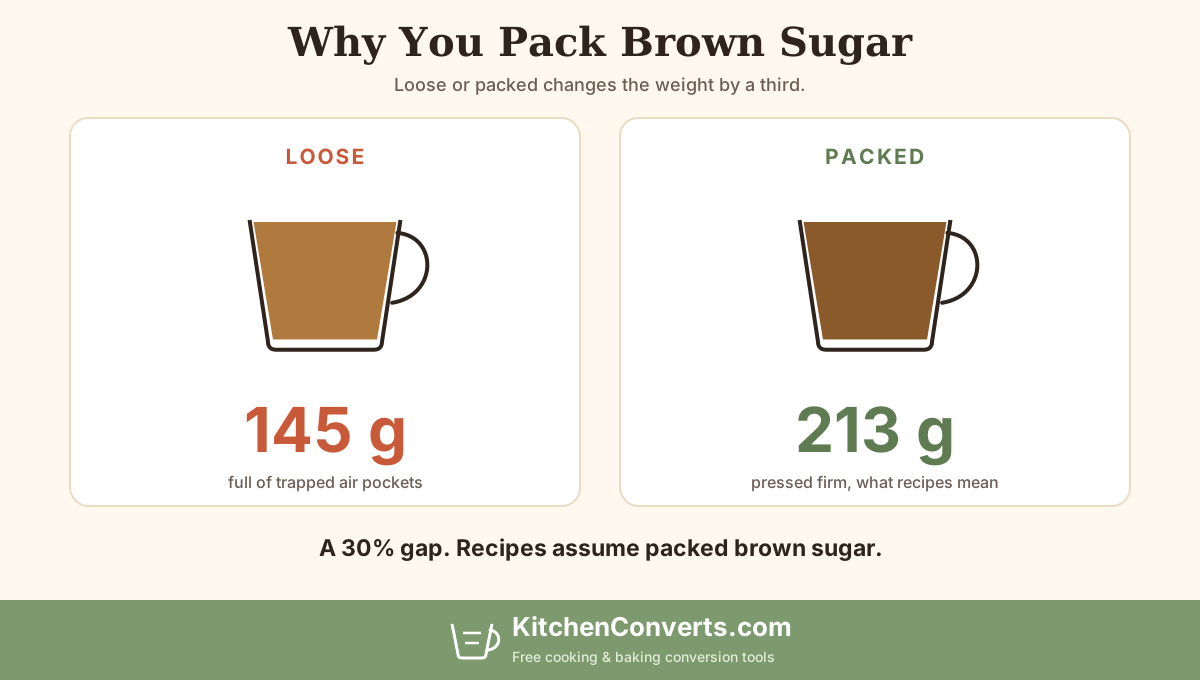
If a recipe says "1 cup brown sugar," it almost always means 1 cup packed brown sugar. That is not how brown sugar comes out of the bag, and that is where home cooks lose track of their recipe.
What packed means
Brown sugar has molasses in it. The molasses makes the sugar sticky and creates air pockets when you spoon it into a cup. Loose, those pockets stay. Packed, you press the sugar down with the back of a spoon or your hand until the pockets close up.
To check that you packed it right, turn the cup over. The brown sugar should hold the cup's shape for a moment before falling out. If it just falls out as a loose pile, it was not packed.
Why this matters
Packed brown sugar weighs 213 grams per US cup. Loose brown sugar weighs about 145 grams per cup. That is a 30 percent gap. If the recipe wanted 213 grams and you used 145, you cut almost a third of the sugar.
Cookies turn out drier. Sauces taste less sweet. Bars and bread come out flat. The recipe still works, but it is not the recipe the writer made.
The easy fixes
- Use a measuring cup with straight sides (not a curved scoop). It packs more reliably.
- Press with the back of a spoon, the bottom of a smaller cup, or clean fingers.
- Level the top with a knife after packing.
- Or skip all of this and weigh: 213 grams equals 1 packed cup.
What if my brown sugar is hard?
Hard brown sugar still weighs the same per cup once packed, but it is hard to actually pack. To soften it: put a damp paper towel on top in a microwave-safe bowl and heat for 20 seconds. Or put a slice of bread in the bag overnight.
Type cups or grams and see the other. Packed value built in.
Sources
Related posts
- Powdered Sugar Weighs Half of Granulated (By Cup)
1 cup of granulated sugar weighs 200 grams. 1 cup of powdered sugar weighs 113 grams. Swapping them by volume will sweeten or starve your recipe.
- High-Altitude Baking: How Cup and Gram Conversions Change Above 3,000 Feet
Above 3,000 feet, the same recipe that worked at sea level falls flat, runs over the pan, or comes out dry. Lower air pressure changes how flour behaves, how leavening works, and how liquids evaporate. Here is exactly what to change and by how much.
- Why Your Kitchen Scale and Measuring Cup Disagree
You measured 1 cup of flour, then weighed it. The scale showed 145 grams. Your recipe wanted 120. Both tools are right. The cup just held more than the recipe expected.
- How to Measure Sticky Honey Without Losing Half in the Cup
Honey clings to the cup. You can lose 10 percent before it makes it into your bowl. A thin oil coating fixes it. Weighing fixes it better.
¿Leer en español? Ver esta publicación.