
May 7, 2026 · Scott Richey · 4 min read
Yeast: Why 1 Packet Is Not 1 Tablespoon
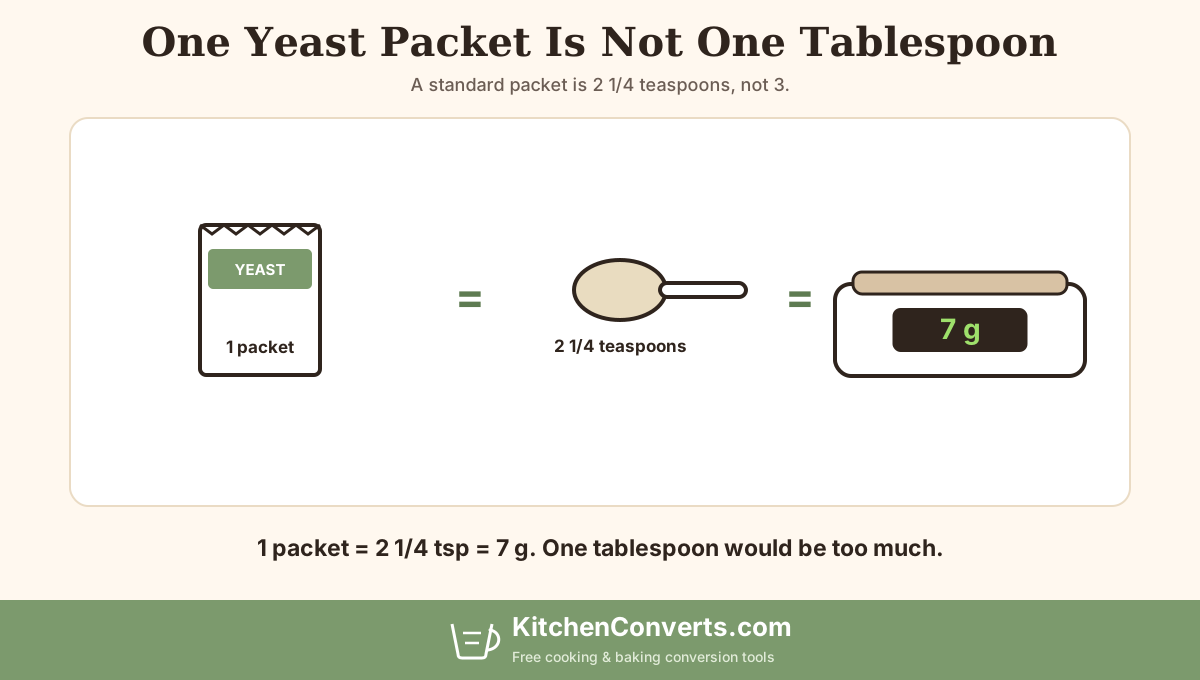
Bread recipe says "1 packet of yeast." You opened the cabinet and found a jar of yeast, not a packet. So you measured a tablespoon, because that is the closest measure you remembered. The bread rose too fast, tasted yeasty, and collapsed in the oven. You used 33 percent too much.
The packet math, written out
- 1 yeast packet = 7 g = 2 1/4 tsp = 1/4 oz
- 1 tsp yeast = 3 g (roughly)
- 1 tbsp yeast = 9 g = 1 1/3 packets
- 2 packets = 14 g = 4 1/2 tsp = 1 1/2 tbsp
- 3 packets = 21 g = about 1 oz (a half-strip of packets)
Active dry vs instant: do not confuse them
Two main yeast types fill home cupboards:
Active dry yeast
Larger grains. Needs to be "proofed" in warm water with sugar before you mix it into dough. The recipe usually says "dissolve in warm water for 5 minutes." If it foams, the yeast is alive.
Instant yeast (sometimes called rapid-rise or bread machine yeast)
Smaller grains. Mixes directly into the flour, no proofing needed. Acts about 25 percent faster than active dry. Convenient for hands-on baking.
Swap rule
To use active dry where the recipe calls for instant, multiply by 1.25 (use 25 percent more). To use instant where the recipe calls for active dry, multiply by 0.75 (use 25 percent less). By weight, they are close enough at small amounts that 1 packet of either works in most recipes.
Fresh yeast (cake yeast)
Less common in home kitchens. Sold as a small wet block in the refrigerator section. The conversion: 1 packet of dry yeast = about 17 grams of fresh yeast. The math is 1:2.5 (dry to fresh) by weight. Fresh yeast lasts only 2 to 3 weeks; dry yeast lasts a year in the fridge.
Storing yeast so it stays alive
- Sealed packets: store at room temperature until the expiration date on the package.
- Open jars or strip packs: transfer to a clean airtight container, store in the fridge for up to 4 months, or freezer for up to a year.
- Always proof old yeast (warm water + pinch of sugar, wait 5 minutes for foam). If it does not foam, it is dead.
Convert tablespoons, teaspoons, cups, and milliliters.
Sources
Related posts
- High-Altitude Baking: How Cup and Gram Conversions Change Above 3,000 Feet
Above 3,000 feet, the same recipe that worked at sea level falls flat, runs over the pan, or comes out dry. Lower air pressure changes how flour behaves, how leavening works, and how liquids evaporate. Here is exactly what to change and by how much.
- Why Your Kitchen Scale and Measuring Cup Disagree
You measured 1 cup of flour, then weighed it. The scale showed 145 grams. Your recipe wanted 120. Both tools are right. The cup just held more than the recipe expected.
- How to Measure Sticky Honey Without Losing Half in the Cup
Honey clings to the cup. You can lose 10 percent before it makes it into your bowl. A thin oil coating fixes it. Weighing fixes it better.
- Rolled vs Quick vs Steel-Cut Oats: Same Name, Different Weight
Rolled and quick oats both weigh about 90 grams per cup. Steel-cut oats weigh 180 grams per cup. Swapping one for another in a recipe changes everything.
¿Leer en español? Ver esta publicación.