
Apr 22, 2026 · Scott Richey · 4 min read
Convection Oven: Drop 25°F (and Here Is Why)
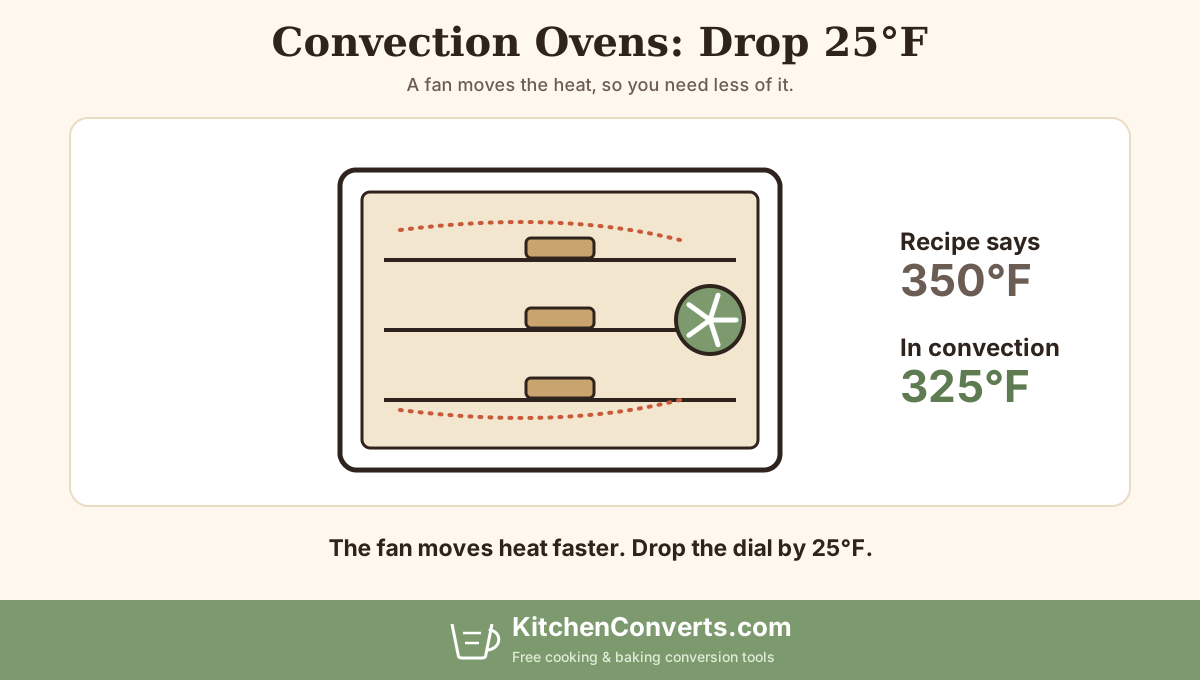
Your recipe says 350°F. Your oven has a convection button. Do you push it? If you do, you need to make one small change: lower the dial by 25 degrees, or take the food out sooner. The why is in the fan.
What the convection fan actually does
A regular oven heats the air inside the box. The air sits still. The food next to the heating element cooks faster than the food in the middle.
A convection oven adds a fan. The fan moves the hot air around constantly. Every side of the food gets the same heat. That sounds small, but it changes how fast the surface dries out, how fast browning happens, and how evenly the inside cooks.
Why 25°F is the magic number
Manufacturers and test kitchens settled on 25°F because it lines convection results up with conventional results. America's Test Kitchen, KitchenAid, and GE all recommend the same adjustment.
For 350°F set the dial to 325. For 400°F set 375. For 425°F set 400. The food browns the same and cooks in roughly the same time as a regular oven at the recipe's stated temperature.
When NOT to adjust
- Cakes with a delicate rise (chiffon, angel food). The fan can crack the top. Stick to conventional for these.
- Custards, cheesecakes, and water-bath bakes. They cook gently; convection can over-dry.
- Anything with a high liquid content where you do not want a crust.
- Recipes that already say "convection 350°F." The writer already adjusted.
Quick adjustment table
- Recipe 300°F → Convection 275°F
- Recipe 325°F → Convection 300°F
- Recipe 350°F → Convection 325°F
- Recipe 375°F → Convection 350°F
- Recipe 400°F → Convection 375°F
- Recipe 425°F → Convection 400°F
- Recipe 450°F → Convection 425°F
Check the food about 10 to 15 percent earlier than the recipe says, even with the temperature dropped. Use a thermometer for anything where doneness matters.
Convert any oven temperature with gas marks for UK recipes.
Sources
Related posts
- How Long to Cook a Turkey Per Pound (and Why the Charts Disagree)
An unstuffed turkey roasts about 13 minutes per pound at 325F, and a stuffed one a little longer. But every chart you find gives a slightly different number. Here is why they disagree, and how to plan your turkey so it is done when dinner is.
- High-Altitude Baking: How Cup and Gram Conversions Change Above 3,000 Feet
Above 3,000 feet, the same recipe that worked at sea level falls flat, runs over the pan, or comes out dry. Lower air pressure changes how flour behaves, how leavening works, and how liquids evaporate. Here is exactly what to change and by how much.
- Why Your Kitchen Scale and Measuring Cup Disagree
You measured 1 cup of flour, then weighed it. The scale showed 145 grams. Your recipe wanted 120. Both tools are right. The cup just held more than the recipe expected.
- How to Measure Sticky Honey Without Losing Half in the Cup
Honey clings to the cup. You can lose 10 percent before it makes it into your bowl. A thin oil coating fixes it. Weighing fixes it better.
¿Leer en español? Ver esta publicación.