
May 3, 2026 · Scott Richey · 4 min read
How to Halve a Recipe With One Egg
You found a small-batch recipe online, but you want it smaller. The recipe makes 12 cookies. You only want 6. The math is easy: cut everything in half. Then you get to the eggs. There is one. Now what?
The three ways to halve an egg
1. By weight (most accurate)
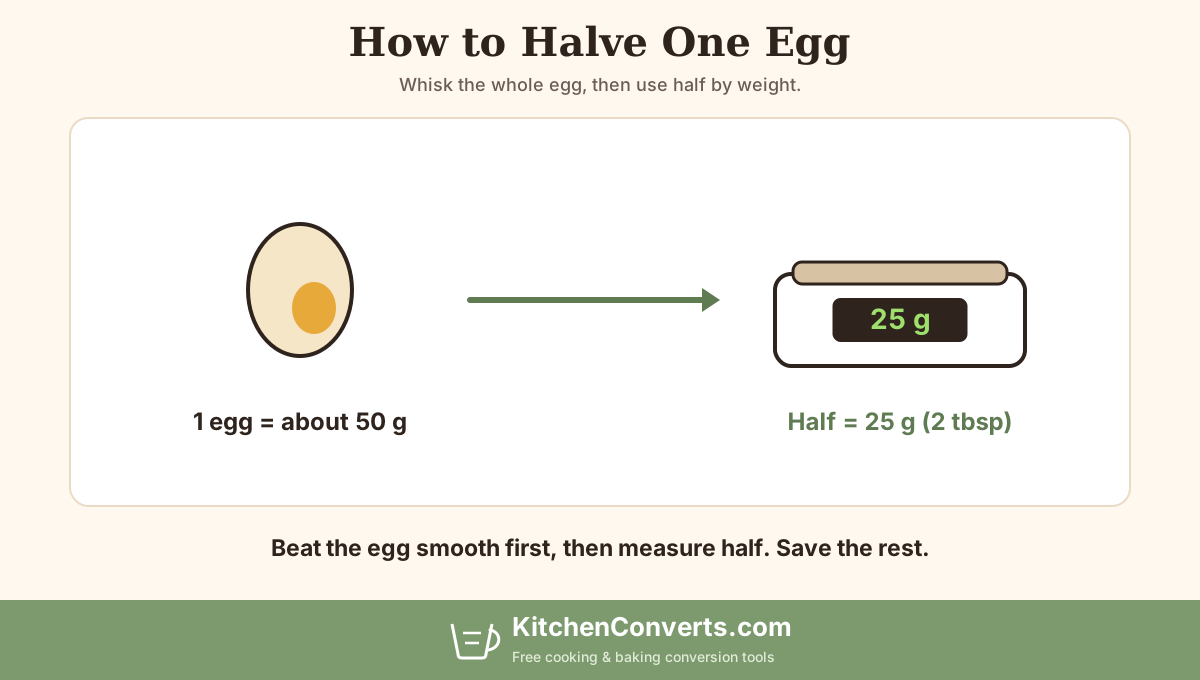
Crack the egg into a bowl. Whisk until smooth. Place the bowl on a kitchen scale, hit tare, and pour out 25 grams. This is the method professional bakers use because it removes all the guessing.
2. By volume (no scale needed)
Crack and whisk the same way. Use a tablespoon measure to scoop 2 tablespoons. A large beaten egg measures about 4 tablespoons total, so 2 tablespoons is right at half.
3. The yolk-and-white split (for custards)
For custards and creams, some bakers use one whole yolk in place of half an egg. The yolk gives richness and binding. Skip the white. This is a baker's shortcut, not a universal swap; it works for crème brûlée, custard, and curd.
What to do with the other half
Cover the remaining whisked egg and refrigerate. It keeps for up to 2 days. Use it in:
- Tomorrow's scrambled eggs or omelette (just whisk into more eggs)
- A small batch of pancakes
- An egg wash for bread or pastry (mix with a splash of water)
- French toast batter
When the egg ratio really matters
Eggs do four jobs in baking: they bind, they leaven, they add moisture, and they emulsify. The more a recipe depends on egg structure, the more accuracy matters.
- Cookies and quick breads: eyeballing half an egg is fine.
- Pound cakes and butter cakes: weigh it.
- Sponge cakes, soufflés, and meringues: do not halve. Make the full recipe or scale to a different yolk-to-white ratio entirely.
What about extra-large or jumbo eggs?
US large eggs are 50 grams out of the shell. Extra-large are 56 grams. Jumbo are 63 grams. If your recipe says "large egg" and you only have jumbo, weighing avoids the mismatch. For halving, use 25 grams regardless of egg size.
Halve, double, or triple any recipe and see the new amounts.
Sources
Related posts
- Doubling a Recipe Does Not Double the Cook Time
When you double a recipe, the food does not need twice as long in the oven. Add 25 to 30 percent, watch closely, and use a thermometer.
- High-Altitude Baking: How Cup and Gram Conversions Change Above 3,000 Feet
Above 3,000 feet, the same recipe that worked at sea level falls flat, runs over the pan, or comes out dry. Lower air pressure changes how flour behaves, how leavening works, and how liquids evaporate. Here is exactly what to change and by how much.
- Why Your Kitchen Scale and Measuring Cup Disagree
You measured 1 cup of flour, then weighed it. The scale showed 145 grams. Your recipe wanted 120. Both tools are right. The cup just held more than the recipe expected.
- How to Measure Sticky Honey Without Losing Half in the Cup
Honey clings to the cup. You can lose 10 percent before it makes it into your bowl. A thin oil coating fixes it. Weighing fixes it better.
¿Leer en español? Ver esta publicación.