
May 5, 2026 · Scott Richey · 4 min read
Rolled vs Quick vs Steel-Cut Oats: Same Name, Different Weight
The grocery store has four shelves of oats. They all say "oats" on the front. The recipe just says "1 cup of oats." The wrong choice can make oatmeal cookies that crunch like gravel or overnight oats that stay raw.
What each kind actually is
Rolled oats (old-fashioned)
Whole oat groats steamed and pressed flat. They look like coins. They take 5 to 10 minutes to cook into oatmeal. Best for oatmeal cookies, granola, crumbles, and overnight oats. 90 grams per cup.
Quick oats
Rolled oats cut smaller so they cook in 1 to 3 minutes. Same weight per cup as rolled. They give a softer, more porridge-like texture in baking. You can usually swap them for rolled, but cookies and granola will be less chewy.
Steel-cut oats (Irish oats)
Whole oat groats chopped into pieces with steel blades, not rolled flat. They look like coarse rice. Cook time: 20 to 30 minutes. Used for stovetop oatmeal, savory oats, and risotto-style dishes. Almost never used in baking.
Instant oats
Pre-cooked, dried, and rolled even thinner. Ready in 1 minute with hot water. Mainly found in flavored single-serve packets. Not used in baking; the texture turns to mush.
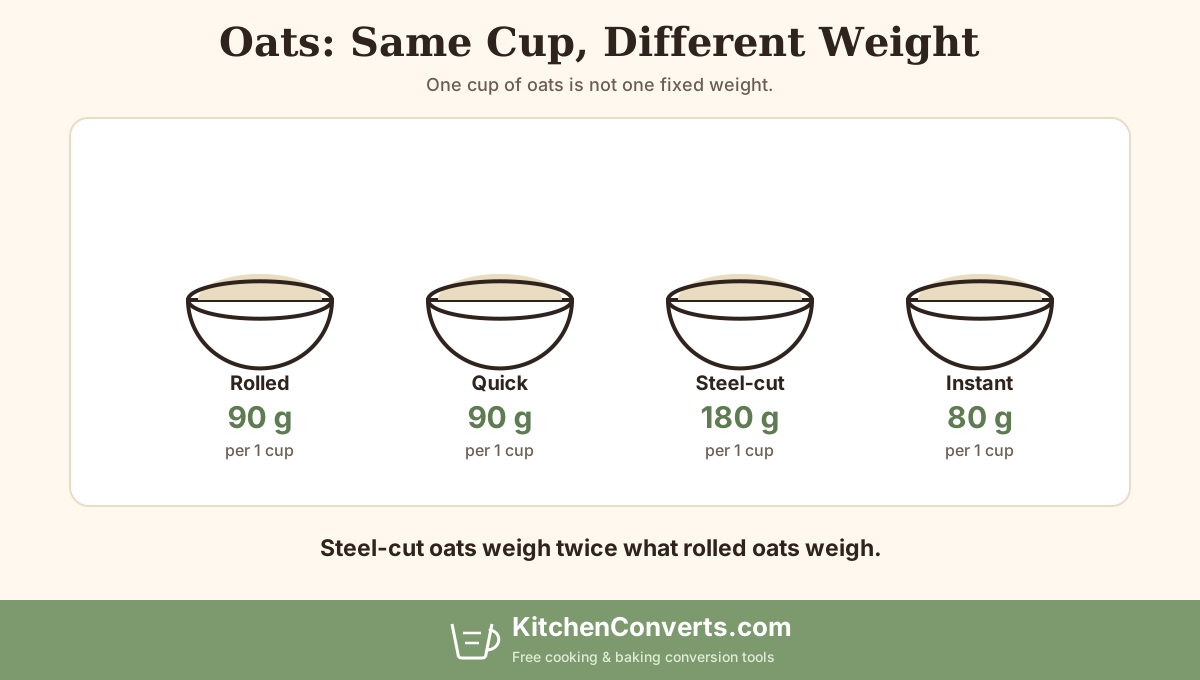
Why steel-cut weighs twice as much
Rolled and quick oats are mostly air. Each flake holds its shape, leaving gaps. Steel-cut is solid grain chopped into pieces, with much less air between them. The same cup volume packs in nearly twice the mass.
Can I swap them in a recipe?
- Rolled ↔ quick: usually yes. Cookies will be less chewy with quick. Granola will be finer. Overnight oats work with either.
- Rolled → steel-cut in baking: no. Steel-cut needs cooking before it softens. Baked goods will crunch.
- Steel-cut → rolled in stovetop oatmeal: yes, but cook time drops from 25 minutes to 10. Texture goes from chewy to creamy.
- Instant → anything in baking: no. The texture is too soft and breaks down.
What about gluten-free oats?
Same weights per cup. Gluten-free oats are normal oats grown and processed separately from wheat, so the weight and texture match standard oats of the same cut.
Convert any oat type between cups and grams.
Sources
Related posts
- High-Altitude Baking: How Cup and Gram Conversions Change Above 3,000 Feet
Above 3,000 feet, the same recipe that worked at sea level falls flat, runs over the pan, or comes out dry. Lower air pressure changes how flour behaves, how leavening works, and how liquids evaporate. Here is exactly what to change and by how much.
- Why Your Kitchen Scale and Measuring Cup Disagree
You measured 1 cup of flour, then weighed it. The scale showed 145 grams. Your recipe wanted 120. Both tools are right. The cup just held more than the recipe expected.
- How to Measure Sticky Honey Without Losing Half in the Cup
Honey clings to the cup. You can lose 10 percent before it makes it into your bowl. A thin oil coating fixes it. Weighing fixes it better.
- Yeast: Why 1 Packet Is Not 1 Tablespoon
A standard packet of yeast is 7 grams or about 2 and 1/4 teaspoons. That is 3/4 of a tablespoon, not a full one. Using a full tablespoon adds 33 percent more yeast.
¿Leer en español? Ver esta publicación.