Apr 12, 2026 · Scott Richey · 4 min read
Wet vs Dry Measuring Cups: When the Difference Actually Matters
Your kitchen drawer has two kinds of measuring cups. The glass one with the spout is for liquids. The flat metal or plastic ones are for solids. They both say "1 cup" on them. They both hold 240 ml. So why have both?
What each cup is designed for
Wet (liquid) measuring cup
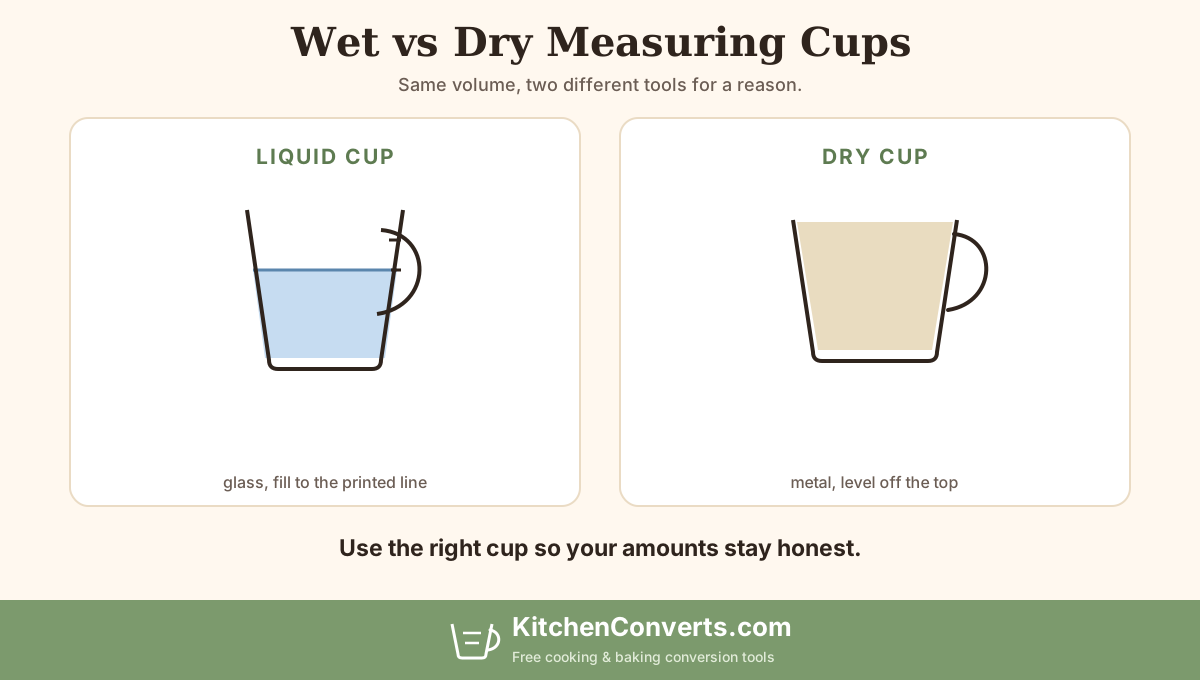
Usually clear glass or plastic, with a spout. The markings stop short of the top so you have headroom and can read the meniscus (the curve where liquid touches the side). Used for water, milk, oil, broth, juice, honey, any pourable liquid.
Dry measuring cup
Usually metal or plastic. Each cup holds exactly its labeled amount, level with the rim. You fill it past the top, then drag a knife across to scrape off the extra. Used for flour, sugar, oats, nuts, anything you can level.
What goes wrong when you mix them up
Liquid in a dry cup
No spout to pour from cleanly. The cup is filled to the very top, so you spill on the way to the bowl. Reading the meniscus is hard because the cup is full. Result: usually under-measures because some liquid spills.
Flour in a liquid cup
The markings stop below the rim. You cannot level the flour, because there is no flat reference to scrape against. You either eyeball the line (inaccurate) or fill to the top (over-measures by 5 to 10 percent). Either way, the cup ends up heavier than the recipe expected.
When the mix-up does not matter
For cooking, the difference disappears in the pot. Pasta sauce, soup, stew, stir-fry: a tablespoon of variance changes nothing. The cups are interchangeable for casual cooking.
For baking, the difference shows. Cake recipes, cookies, bread, pastry: use the right cup. Or skip cups entirely and weigh.
The shortcut
If you bake often, owning both is worth the $10 to $20. If you bake rarely, a digital kitchen scale does the job of both for under $30. The scale never asks which cup you grabbed.
Skip the cup question. Pick your food, get the weight.
Sources
Related posts
- Why Your Kitchen Scale and Measuring Cup Disagree
You measured 1 cup of flour, then weighed it. The scale showed 145 grams. Your recipe wanted 120. Both tools are right. The cup just held more than the recipe expected.
- High-Altitude Baking: How Cup and Gram Conversions Change Above 3,000 Feet
Above 3,000 feet, the same recipe that worked at sea level falls flat, runs over the pan, or comes out dry. Lower air pressure changes how flour behaves, how leavening works, and how liquids evaporate. Here is exactly what to change and by how much.
- How to Measure Sticky Honey Without Losing Half in the Cup
Honey clings to the cup. You can lose 10 percent before it makes it into your bowl. A thin oil coating fixes it. Weighing fixes it better.
- Yeast: Why 1 Packet Is Not 1 Tablespoon
A standard packet of yeast is 7 grams or about 2 and 1/4 teaspoons. That is 3/4 of a tablespoon, not a full one. Using a full tablespoon adds 33 percent more yeast.
¿Leer en español? Ver esta publicación.